
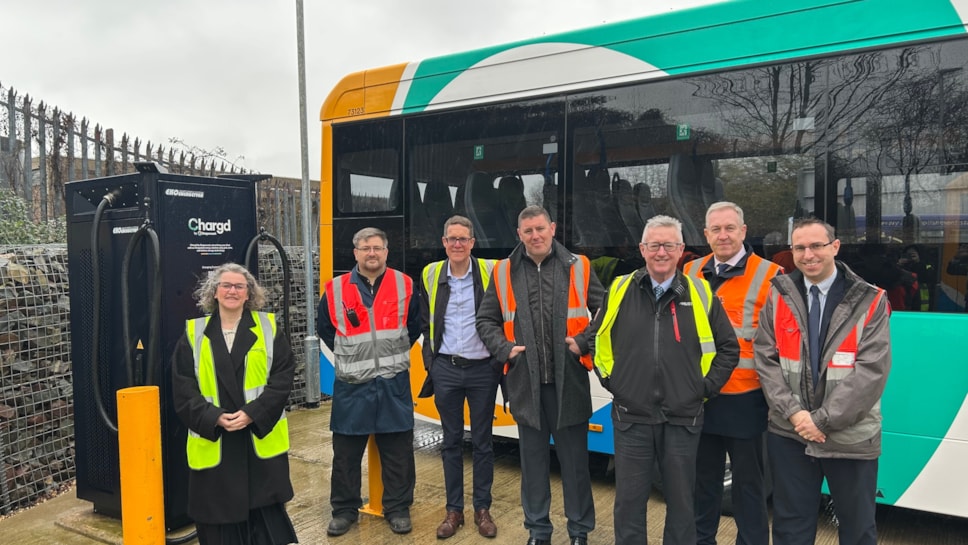
Industry leaders gather at Stagecoach Nuneaton to accelerate the roadmap for zero-emission bus fleets
- Experts agreed the transition to zero-emission buses requires a collaborative approach at all levels of government, prioritising investment in depot infrastructure, grid capacity and energy systems
- The session explored ‘joined-up’ solutions to maximise large-scale decarbonisation across the transport sector
- The event demonstrated how local electrification projects like the Nuneaton depot serve as essential models for national societal and environmental goals
Stagecoach, the UK’s largest bus and coach operator, hosted local leaders, government representatives, and transport experts this week at its Nuneaton depot for a high-level roundtable: “Driving change: Powering the journey to cleaner and more reliable buses”.
Convened by Campaign for Better Transport, in partnership with Stagecoach, the event addressed the urgent need to decarbonise the transport sector. As the UK awaits the first Integrated National Transport Strategy in over 25 years, the discussion highlighted how transitioning to zero-emission buses is a cornerstone of "joined-up" policy making - improving air quality and reducing CO2 emissions, while improving customer experience and connecting communities to vital services.
The bus industry is seen as ahead of many other transport sub‑sectors in practical electrification experience, particularly on depot charging at scale.
This local initiative reflects Stagecoach’s significant national commitment to decarbonising its operations. Through sustained and strategic investment in electric vehicle technology, more than 15% of Stagecoach’s 8,300-strong national fleet is now comprised of zero-emission vehicles.
The roundtable emphasised that achieving a net-zero fleet requires more than just replacing diesel engines. Participants discussed the critical "behind-the-scenes" requirements, including:
- Infrastructure & energy: Strategic investment in depot electrification and grid capacity.
- Shared assets: The opportunity for "open depots," where bus charging infrastructure is shared with partner fleets to maximise decarbonisation.
- Operational planning: Re-designing routes and schedules to suit electric vehicle duty cycles.
Tony Cockcroft, Asset Management Director at Stagecoach, said:
"Hosting this group at our heavily electrified depot allows us to move the conversation from theory to reality. We are proud to show that with the right partnerships—across local authorities and energy providers—the journey to a more sustainable bus network is well underway."
Ben Plowden, Chief Executive of Campaign for Better Transport and Chair of the session, added:
"Cleaner, more reliable buses transform how communities move and connect to social and economic opportunities. This transition is a perfect example of the integrated decision-making we need to tackle our biggest societal challenges. By bringing together operators, government, and grid experts, we are ensuring the roadmap to zero-emission is both practical and ambitious."
Hosted at Stagecoach’s Nuneaton site, attendees saw first-hand how large-scale electrification works in practice. The depot serves as a blueprint for how legacy infrastructure can be transformed into a modern, green energy hub.
Jodie Gosling MP for Nuneaton, said:
"We are invested in improving public transport and air pollution in Nuneaton. It was great to collaborate with multiple partners across the industry on the improvement Stagecoach has made to their fleet of buses which has improved customer experience and air quality in our community.’’
The event featured a diverse mix of in-person and virtual contributors, including:
- Jodie Gosling, MP for Nuneaton
- Tony Cockcroft, Asset Management Director at Stagecoach
- Ben Plowden, CEO, Campaign for Better Transport
- Fiona Lee, Deputy Director: Bus Partnerships & Decarbonisation, Department for Transport
- Ben Cattermole, Head of Transport Decarbonisation, National Grid
- Industry Partners: VEV, Yutong UK, Confederation of Passenger Transport (CPT), and Energy Saving Trust.